
Yes, both terracotta and concrete tile roofs may be suitable for restoration, depending on their condition. The roof’s age, structure, drainage and extent of damage all affect the decision.
If you’re comparing terracotta vs concrete roof tiles, don’t judge the roof by appearance alone. Fading, dirt and moss may be largely cosmetic, while cracked tiles, recurring leaks or failing ridge capping may require repairs before restoration.
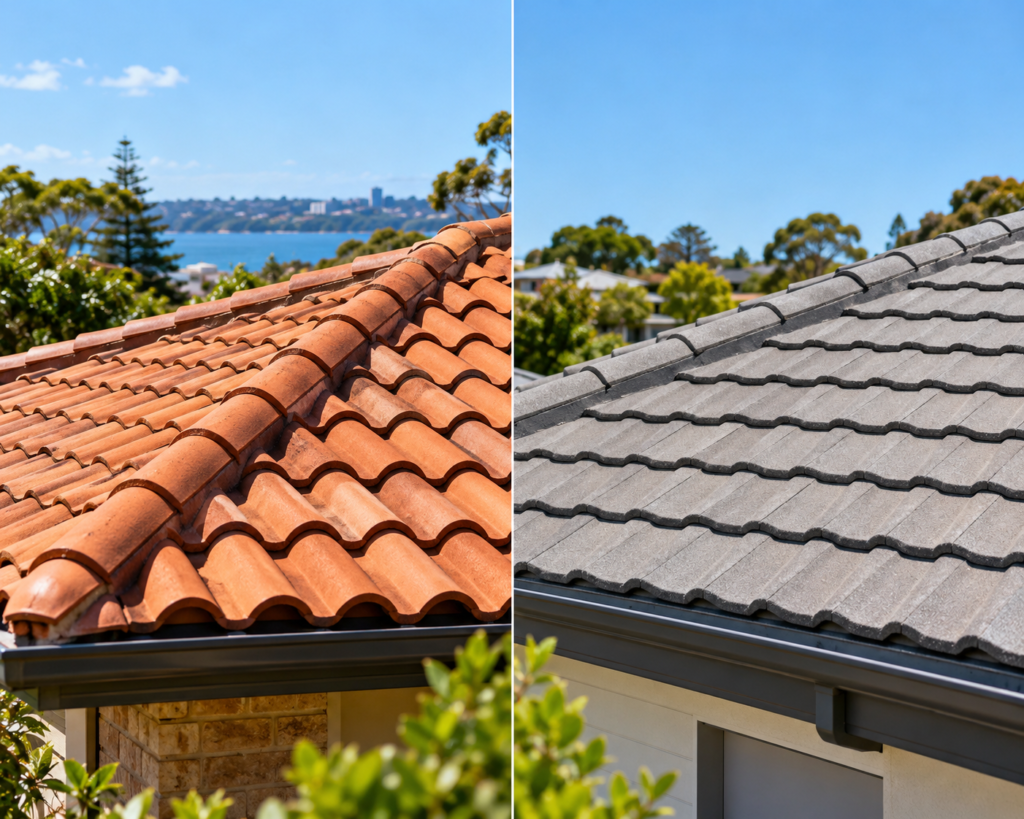
What Are Terracotta Roof Tiles?
Terracotta tiles are made from fired clay and suit many older Sydney homes thanks to their natural colour and traditional look. Over time, they can crack, discolour or develop moss and lichen. Ridge capping bedding and pointing may also deteriorate, so signs of damage or leaks should be inspected.
What Are Concrete Roof Tiles?
Concrete tiles are made from a cement-based mixture and are common on mid-century and newer Australian homes. They can fade, crack, chip or develop moss. Storms may displace tiles, but fading alone doesn’t mean painting is necessary. The right approach depends on the tile condition and any repairs needed.
Terracotta vs Concrete Roof Tiles: Key Differences
Neither material is automatically better for restoration. The roof’s condition and your priorities matter more than the tile type alone.
| Feature | Terracotta tiles | Concrete tiles |
| Appearance | Natural clay colour; suits traditional homes | Varied profiles and finishes; colour may fade |
| Handling | Replacement tiles must fit the existing profile | Compatible profiles and careful handling are also essential |
| Common ageing issues | Cracks, discolouration, moss and worn bedding | Fading, surface wear, chips, cracks and moss |
| Restoration | Cleaning and repairs may be suitable; coating needs assessment | Cleaning, repairs and repainting may be options |
| Matching | Older colours and profiles can be difficult to match | Matching colour and profile may also be challenging |
Sydney’s strong UV, summer heat, heavy rain and seasonal storms can affect both materials. Coastal salt air may also affect roof components in exposed locations.
When Can a Terracotta Tile Roof Be Restored?
Restoration may be suitable when the roof structure is sound and problems are mainly surface-level or localised. Cleaning dirt and moss, replacing damaged tiles and addressing worn ridge capping may be part of the work.
Terracotta needs careful assessment before any coating is considered. Porosity, previous treatments and tile condition all matter. On older character homes, preserving the original appearance may also influence the decision. The right roof restoration approach will depend on the roof’s condition and the work it needs.
When Can a Concrete Tile Roof Be Restored?
A concrete tile roof may be suitable for restoration if its tiles remain sound but show fading, surface wear or moss and lichen buildup. Minor tile repairs and ridge capping work may also be required.
Repainting can form part of restoration, but paint won’t fix cracked tiles, leaks or structural movement. Cleaning and necessary repairs should come first, and the surface must be suitable for the proposed coating. Where the tiles are in suitable condition, roof painting may help refresh the roof’s appearance.
When Is Restoration Not the Right Answer?
Restoration may not be suitable where there’s widespread damage or problems beyond the tile surface. Warning signs include:
- Numerous cracked or missing tiles.
- Repeated leaks or significant water entry.
- Sagging or structural movement.
- Damaged flashing or extensive deterioration beneath the tiles.
- Failing bedding or a roof nearing the end of its practical service life.
An inspection can help determine whether repairs, restoration or replacement is the most sensible option. If tiles are damaged or water is getting inside, timely roof repairs can help address the underlying issue before further work is considered.
What Does a Tile Roof Restoration Involve?
There’s no single process for every roof. Depending on the material and condition, restoration may involve:
- Inspecting tiles, roof structure, drainage and flashing.
- Cleaning dirt, moss and lichen using a suitable method.
- Repairing or replacing damaged tiles.
- Rebedding ridge capping where mortar bedding has deteriorated.
- Repointing ridge capping with a suitable flexible pointing compound.
- Checking gutters and flashing, then priming or painting where appropriate.
- Completing a final inspection and clean-up.
After the work, routine roof maintenance can help identify developing issues. The right approach depends on the roof’s exposure and condition.
FAQs
Get Advice on Your Tile Roof in Sydney
Before choosing restoration or replacement, have your roof assessed. An inspection can help distinguish cosmetic wear from localised damage or more widespread problems, giving you a clearer idea of the work that may be needed.
Need advice about your tiled roof? Call Sydney Wide Roofing Co on Before choosing restoration or replacement, have your roof assessed. An inspection can help distinguish cosmetic wear from localised damage or more widespread problems, giving you a clearer idea of the work that may be needed.
Need advice about your tiled roof? Call Sydney Wide Roofing Co on (02) 9000 1626 to discuss your options. to discuss your options.