
A leaking roof in Sydney usually comes down to one of a handful of common causes, from cracked tiles to failed flashing around a chimney or vent. Knowing what each cause looks like helps you describe the problem accurately and understand roughly what kind of repair it might need.
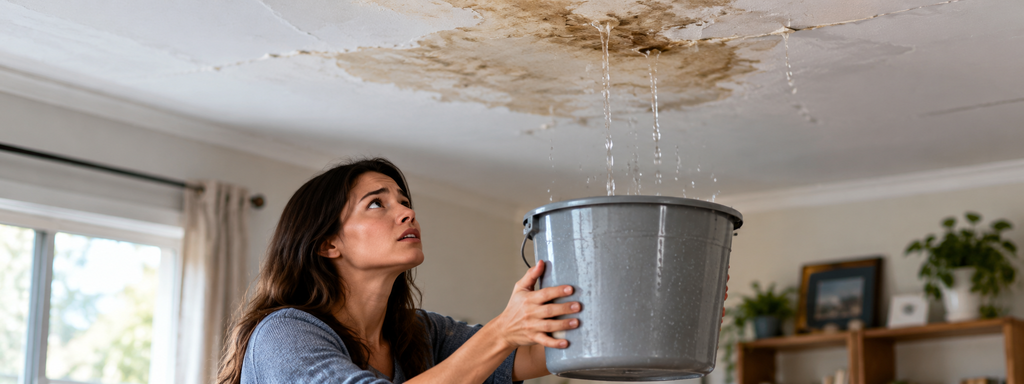
1. Cracked or Broken Roof Tiles
A cracked or broken tile creates a direct gap for water to enter, especially during heavy Sydney downpours.
It is often caused by age, foot traffic on the roof, or falling debris, and water can travel along the structure underneath before it shows up inside as a stain, sometimes well away from the actual crack. A straightforward roof repair expert Sydney visit can usually resolve this on its own.
2. Deteriorated Ridge Capping
Ridge capping sits along the peak of the roof and is bedded and pointed in place. When that bedding breaks down, water can get in at the very top of the roof. . If you notice movement, cracks, or gaps along the ridge, it is worth knowing the signs your ridge capping needs attention before the problem leads to water entering the roof space.
This is a common issue on older tile roofs where the original mortar has aged and cracked over many Sydney summers.
3. Failed or Damaged Flashing
Flashing seals the joins around chimneys, skylights, and vents. Once it lifts, cracks, or rusts, those junctions become one of the most common places for a leaking roof to start, since they are natural weak points in an otherwise sealed surface.
4. Blocked or Damaged Gutters
Gutters that are full of leaves or physically damaged can send water back under the roofline instead of away from the house, which often looks like a roof leak even though the roof surface itself is fine.
If they are damaged rather than just blocked, it may be time to replace your gutters instead of clearing them again.
5. Rusted or Corroded Metal Roofing
On metal roofs, rust and corrosion eventually create small holes or weak points where water gets through, particularly around fasteners and joins that have been exposed to Sydney’s coastal air for years. Older metal sheeting is more prone to this than roofs installed more recently.
6. Worn Pointing and Mortar
Pointing is the flexible material that seals gaps between tiles and ridge capping. Once it dries out and cracks, water finds its way through openings that are often too small to spot from the ground, which is why this cause is easy to miss during a quick visual check.
7. Roof Valley Deterioration
Valleys, where two sections of roof meet, carry a large volume of water during rain, so any damage, rust, or blockage here tends to cause leaks faster than flatter parts of the roof, especially during a heavy downpour. Keeping these areas clear is also an important part of preparing your roof for storms, particularly before perio ds of heavy rainfall and strong winds.
8. Ageing or Failing Roof Coating
Roof coatings protect the surface from Sydney’s sun and rain, and once that layer breaks down, tiles or metal underneath become more porous and start letting water through over time.
In cases like this, a broader restore your roof Sydney approach can address the surface as a whole rather than patching individual spots.
9. Skylight and Vent Seal Failure
The seals around skylights and roof vents wear out over time, and once they do, that spot becomes an easy entry point for water, regardless of how sound the rest of the roof is. This is a common cause in homes with several roof penetrations for vents, skylights, or solar equipment.
If you notice damp patches, water marks, or dripping around these areas, they can be among the common signs of a roof leak that should not be ignored.
10. Storm and Wind Damage
Strong wind and storms can lift tiles, dislodge flashing, or drive debris into the roof surface, creating sudden leaks that were not there before the weather event.
When that happens, an urgent leak callout is usually a better first step than waiting for a routine booking.
Most of these causes look similar from inside the house, which is why a proper inspection matters more than guessing from a ceiling stain. A professional inspection can help determine how roof leaks are detected and identify where water is actually entering, rather than relying only on the location of an internal stain. If you want the exact cause confirmed, you can get your roof leak repaired once the source is identified, rather than repeatedly patching the same spot and hoping it holds.
To get your roof checked properly, contact our team or call Sydney Wide Roofing Co to arrange an inspection for your leaking roof.