
The roof restoration process usually starts with an inspection, followed by cleaning, necessary repairs, and, where suitable, protective coatings or paint. It involves more than washing an old roof and giving it a fresh colour.
The right approach depends on whether the roof is tiled or metal, its age and condition, and any hidden damage. Sydney’s heavy rain, summer heat and coastal air affect roofing materials differently, so the work should suit the roof rather than follow a standard package.
Step 1: Roof Inspection and Assessment
A proper restoration begins with checking the roof structure, tiles or sheets, ridge capping, flashing, gutters and signs of water entry. The roofer should look for movement, corrosion, damaged components and areas where water may collect.
This assessment helps establish whether restoration is suitable or whether repairs or replacement deserve consideration. Ask what the inspection uncovered and how those findings affect the proposed work.
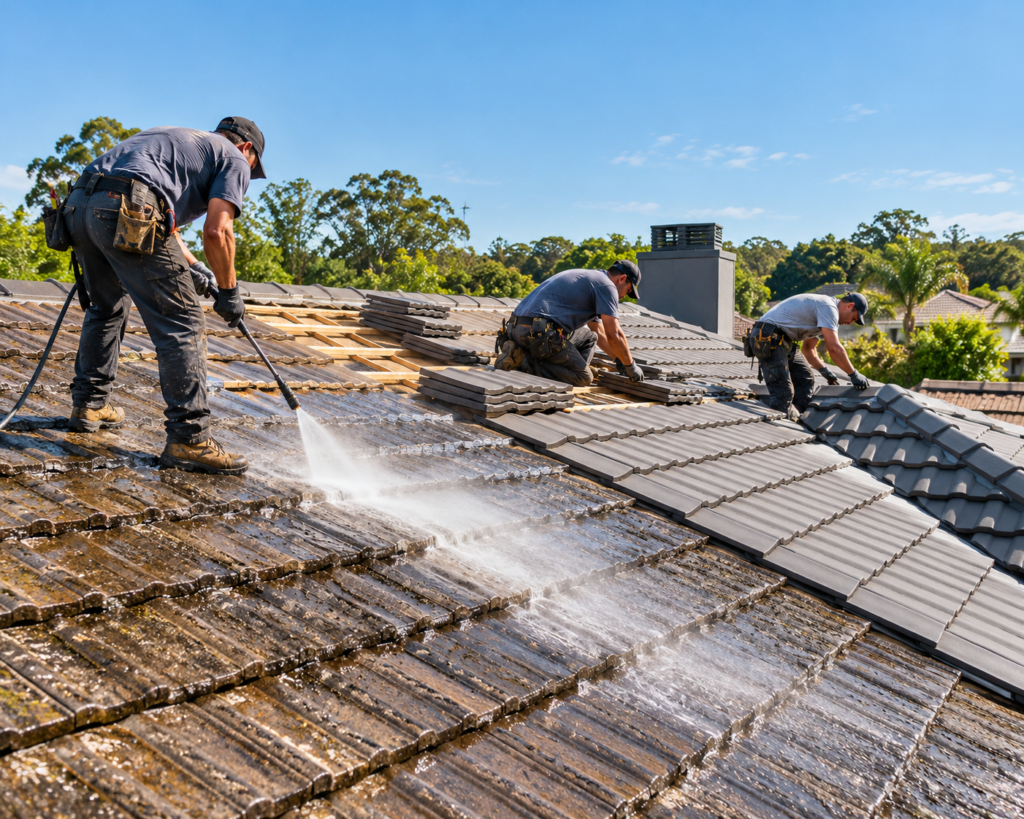
Step 2: Cleaning the Roof
Cleaning removes dirt, moss, lichen and loose debris so the surface can be assessed and prepared. It may also reveal cracks, worn coatings or damage that was difficult to see beforehand.
The method should suit the roof material and condition. Older tiles and corroded metal need particular care. Avoid pressure-washing the roof yourself; working at height and using unsuitable cleaning methods can cause injury or damage.
Step 3: Repairing Damage Before Restoration
Damaged tiles, loose metal sheets, corroded fixings, flashing faults or gutter problems may need attention before coatings are applied. Painting over unresolved damage hides the symptom without fixing the cause.
The repair list should be clear before work continues. If the inspection identifies isolated damage, our Sydney roof repair services may be more appropriate than a full restoration.
Step 4: Repointing and Ridge Capping Work
On tiled roofs, ridge capping covers joints along the roof peak. Cracked mortar or loose caps may need repointing, or rebedding if the underlying mortar has deteriorated.
Not every tiled roof needs this work. It depends on the security of the caps and the condition of the existing mortar. Ask whether ridge capping work is included or quoted separately.
Step 5: Gutter, Flashing, and Drainage Checks
Rain needs a clear path off the roof and away from the building. Blocked, rusted or poorly aligned gutters can overflow during Sydney downpours, while damaged flashing can expose vulnerable joints to water.
Gutters and flashing should be checked, although replacement may not be necessary. If the guttering is beyond practical repair, explore replacement guttering options.
Step 6: Priming and Roof Painting
Priming and painting may refresh the roof’s appearance and provide a protective coating. Products and preparation depend on the material: concrete tiles, terracotta tiles and metal roofing need different treatments.
Paint cannot replace sound roofing or completed repairs, and it will not fix a leak by itself. Ask which products are proposed and why they suit your roof. See roof painting and coating services.
Step 7: Final Inspection and Clean-Up
The roofer should check that the agreed work is complete and gutters and downpipes are clear. The work area should be left tidy, with debris removed.
Use the written scope as your checklist. Raise unfinished work or differences from the agreement before treating the job as complete.
How Long Does a Roof Restoration Take?
The time required depends on several factors:
- Roof size: Larger roofs generally require more time for cleaning, repairs and coating.
- Roof material: Concrete tiles, terracotta tiles and metal roofing need different preparation and treatment methods.
- Existing damage: Cracked tiles, loose ridge capping, corrosion or flashing issues may need repairs before restoration can proceed.
- Weather conditions: Sydney’s rain, humidity and changing temperatures can affect working conditions and the time needed for surfaces and coatings to dry.
- Roof access: Steep rooflines, difficult access and safety requirements can affect how quickly work progresses.
- Unexpected issues: Cleaning may reveal hidden damage that needs attention before the next stage begins.
Before work starts, ask for a realistic schedule in writing. Check what could cause delays, how weather interruptions will be handled, and whether additional repairs could change the agreed timeframe.
FAQs
Get Advice Before Starting a Roof Restoration
Before approving cleaning, repairs or coatings, have the roof assessed and request a written scope. It should explain the work, exclusions and how unexpected damage will be handled, making quotes easier to compare. To discuss your roof restoration process and next steps, give us a call today or contact our team.